OPALABS

DOPA LABS, TECHNOLOGY

From 3D data to a validated, Isaac Sim-ready environment.

A look at how we structure, label, and validate every environment we deliver, the technical foundation behind the process, not just the outcome.

DOPA LABS delivers simulation-ready environments for robotics, validated for NVIDIA Isaac Sim.

Overview

The same process, applied to every environment.

Every environment goes through the same four stages, regardless of domain or complexity. Consistency comes from the process, not from individual craftsmanship.

  1. INPUT

    Environment requirements and reference data are defined.

  2. GENERATION

    Environments are built to meet those specifications.

  3. VALIDATION

    Each environment is checked for physical accuracy.

  4. DELIVERY

    Delivered ready for Isaac Sim integration.

Deep Dive

What happens inside each environment.

Six technical properties define whether an environment is actually usable for robotics simulation, not just visually convincing.

OpenUSD Workflow

Environments are authored in OpenUSD, the open standard for composable, non-destructive 3D scene description.

OpenUSD lets scenes be built from layered, interoperable components rather than a single monolithic file. This is what makes an environment portable across tools, including NVIDIA Omniverse and Isaac Sim, without a format conversion step that risks losing data.

A structured 3D environment shown on review displays, composed of layered, interoperable scene data

SCHEMATIC: USD LAYER COMPOSITION

Scene Structuring

Geometry is organized into a coherent spatial hierarchy, not delivered as an unstructured mesh.

Rooms, objects, and layouts are represented as a structured hierarchy that mirrors how a robot's perception and planning stack expects to reason about space, parent/child relationships, spatial bounds, and named references, not a flat pile of triangles.

A warehouse environment structured as a coherent spatial hierarchy of shelving, floor, and objects

SCHEMATIC: SPATIAL HIERARCHY

Semantic Labels

Every object and surface carries a semantic label, not just a visual appearance.

Class, category, and material information is attached at the asset level, so an environment can be used for perception and planning tasks, object detection, affordance reasoning, navigation, not only for rendering.

A close-up of a warehouse environment with a semantic label, bounding box, and physics collider annotated on the pallet and AMR

SCHEMATIC: SEMANTIC SEGMENTATION MAP

Physics-aware Assets

Assets carry the physical properties simulation requires, alongside their visual geometry.

Collision geometry, mass, and material friction are defined as part of each asset, not added afterward. Where relevant, objects are articulated and interactive, such as doors, drawers, and other moving parts. This is what allows an environment to behave correctly under physics simulation, rather than only looking correct.

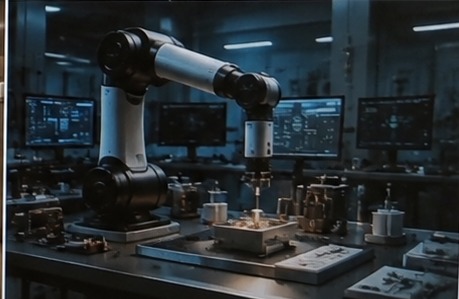
A laboratory workbench environment with precise physical objects and equipment

SCHEMATIC: COLLISION & MASS PROPERTIES

Environment Variations

Environments can vary within controlled parameters such as lighting, placement, and materials, while remaining physically and semantically valid.

Controlled environment variation supports broader training and testing coverage than a single fixed scene, without compromising the physical accuracy or semantic labels established in earlier stages.

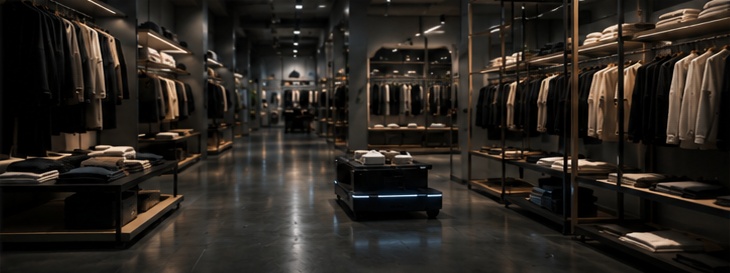
A retail environment, a different indoor domain illustrating environment variation

SCHEMATIC: CONTROLLED ENVIRONMENT VARIATION

Isaac Sim Readiness

Every environment is validated for direct use in NVIDIA Isaac Sim before delivery.

The final stage confirms the environment loads correctly, behaves as expected under simulated physics, and integrates with existing Isaac Sim robot training workflows, the validation step every environment must pass.

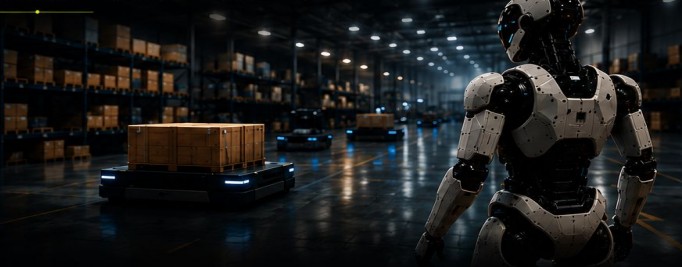
An environment shown with semantic labels, physical properties, and a navigation path, validated and ready for Isaac Sim

SCHEMATIC: ISAAC SIM VALIDATION CHECK

See what these environments look like.

Explore the environment types we deliver, or talk to our team about your simulation requirements.